

 Access Customer portal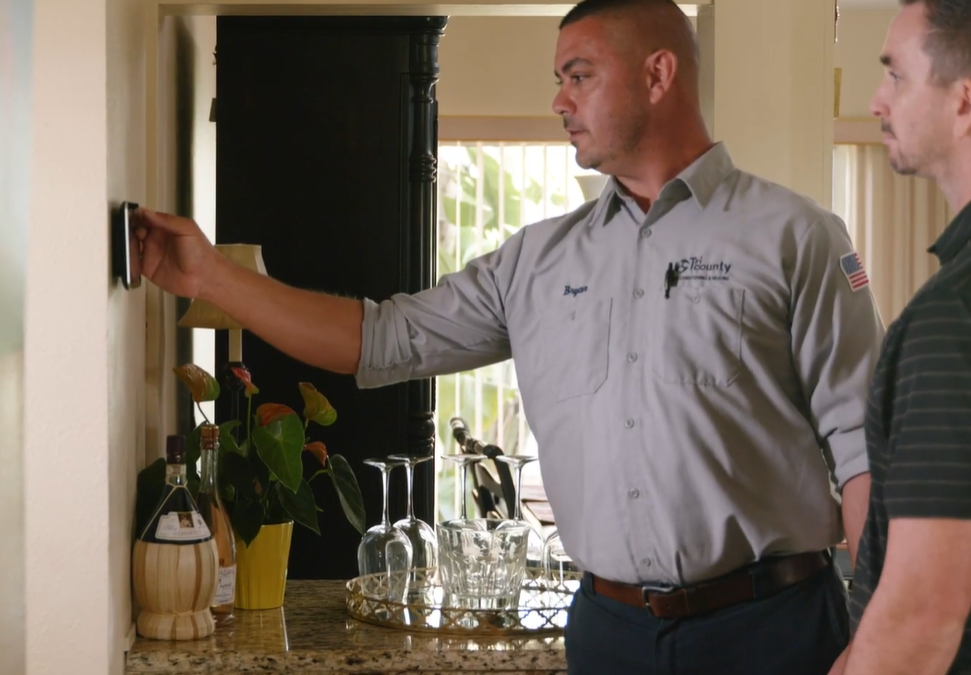
Florida thunderstorms are a fact of life on the Suncoast. From Sarasota and Venice to Bradenton and Port Charlotte, summer storms can bring lightning, heavy rain, strong winds, and sudden power fluctuations – all of which can affect your home’s air conditioning system.
If your AC is running after a thunderstorm but your home isn’t getting cool, don’t panic. There are several things you can safely check before calling for service. Knowing what to look for can also help you determine whether you’re dealing with a simple issue or potential storm-related damage.
1. Check Your Thermostat
Start with the simplest possibility: your thermostat.
Make sure it is set to COOL, the temperature is set below the current indoor temperature, and the fan is set to AUTO rather than ON.
If the thermostat display is blank or behaving differently after the storm, there may have been a power interruption or electrical issue.
2. Check Your Circuit Breaker
Thunderstorms can cause power fluctuations and electrical surges that may trip a circuit breaker.
Check your home’s electrical panel for the breaker associated with your air conditioning system. If it has tripped, you can reset it once.
If the breaker trips again, don’t keep resetting it. Repeatedly tripping a breaker can indicate an electrical problem that needs to be inspected by a qualified HVAC professional.
3. Take a Look at Your Outdoor AC Unit
After a storm, take a quick look at your outdoor condenser.
Is the fan running? Is the unit completely silent? Do you see standing water, branches, leaves, or other debris around the system? Does anything look physically damaged?
Strong Florida winds can blow debris into or around an outdoor AC unit. Never reach inside the unit or attempt to remove debris while the system is running.
If you notice obvious damage or suspect the unit was affected by lightning, turn the system off and have it inspected by an HVAC professional.
4. Check Your Air Filter
A dirty air filter isn’t necessarily caused by a thunderstorm, but it’s one of the easiest things to check when your AC isn’t cooling properly.
Your air conditioner has to work harder when airflow is restricted by a severely clogged filter. In Florida’s hot and humid climate, that extra strain can make it difficult for your system to keep up.
If your filter is dirty, replace it with the correct size and type recommended for your HVAC system.
5. Check Your Vents for Airflow
Walk around your home and check several supply vents. Are they blowing air? Does the air feel cool? Is the airflow weaker than normal?
If some rooms are comfortable while others are warm, or you’re getting very little airflow from your vents, there could be an issue with your ductwork, blower motor, evaporator coil, or another component of the system.
Weak airflow is a good reason to have your AC inspected.
6. Look for Signs of a Frozen AC Coil
If your air conditioner is running continuously but your home isn’t getting cooler, the evaporator coil may be frozen.
Some common signs include:
- Ice on the indoor unit or refrigerant lines
- Water around the indoor HVAC equipment
- Weak airflow from your vents
- The AC running constantly without reaching the thermostat setting
If you see ice, turn the system off and allow it to thaw. Don’t try to chip or scrape the ice away.
A frozen coil can have several causes, including restricted airflow, low refrigerant, or mechanical problems. Once the system has thawed, an HVAC professional can determine why it froze in the first place.
7. Consider Lightning or Power Surge Damage
One of the biggest concerns following a severe Florida thunderstorm is electrical damage.
Lightning and power surges can damage sensitive components inside your HVAC system, including capacitors, contactors, control boards, and other electrical components.
Sometimes the damage is obvious and the system won’t turn on at all. In other cases, your AC may appear to be running normally while failing to produce cool air.
If your air conditioner started behaving differently immediately after a lightning storm or power outage, it’s a good idea to have the system professionally diagnosed.
8. What If the Power Just Came Back On?
If your neighborhood experienced a power outage during the storm, your AC may need a few minutes after power is restored to restart and begin cooling normally.
Check your thermostat and electrical panel, then give the system some time to operate.
If the AC continues running but the temperature inside your home isn’t dropping, don’t assume the problem will resolve itself. There could be an underlying electrical or mechanical issue that needs attention.
When Should You Call an HVAC Professional?
Not every AC problem after a thunderstorm means your system has suffered serious damage. But if you’ve checked the thermostat, breaker, filter, and basic airflow and your home still isn’t cooling, it’s time to have your system inspected.
You should call for HVAC service if:
- Your AC runs continuously but doesn’t cool your home
- The system won’t turn on
- A circuit breaker keeps tripping
- You smell burning or notice unusual electrical odors
- Your AC is making unusual noises
- You see ice on the system or refrigerant lines
- The outdoor unit appears damaged
- Your AC stopped cooling immediately after a lightning strike or power surge
- Your indoor temperature continues rising despite the AC running
Don’t Let a Florida Storm Leave You Sweating
Thunderstorms are part of life in Sarasota, Manatee, and Charlotte counties—but a storm shouldn’t leave you without reliable air conditioning for long.
If your AC is running but not cooling after a thunderstorm, start with the simple checks above. If the problem persists, or if you suspect electrical or storm damage, it’s best to have your system inspected by a qualified HVAC professional.
Getting a problem diagnosed early can help prevent a small issue from becoming a larger—and potentially more expensive—repair, especially when you’re dealing with Florida’s heat and humidity.
Tri County Air proudly serves homeowners throughout Sarasota, Manatee, and Port Charlotte counties. If your AC isn’t keeping up after a Florida storm, our team is ready to help get your home comfortable again.